
First eriococcid and pseudococcid scale insects from Sakhalinian amber
PIOTR WEGIEREK, BARTOSZ OGŁAZA, EVGENY E. PERKOVSKY, and MAŁGORZATA KALANDYK-KOŁODZIEJCZYK
Wegierek, P., Ogłaza, B., Perkovsky, E.E., and Kalandyk-Kołodziejczyk, M. 2026. First eriococcid and pseudococcid scale insects from Sakhalinian amber. Acta Palaeontologica Polonica 71 (2): 337–347.
We describe one genus and species and undetermined immature female instar of scale insects from Sakhalinian amber found in 1972 on the Okhotsk Sea’s (South Sakhalin) beaches. Podococcus elzbietae Kalandyk-Kołodziejczyk & Wegierek gen. et sp. nov. belongs to the family Eriococcidae and it is the first known fossil adult female of this family. Other fossil species of Eriococcidae were described on the basis of immature instars or adult male. Podococcus elzbietae is characterized by the presence of 8-segmented antennae, tarsal digitules knobbed significantly longer than claw digitules, claw digitules knobbed, macrotubular ducts scattered on the margins of venter of abdominal segments, enlarged conical setae on entire body margin, anal lobes prominent with 3 enlarged setae and anal ring with 4 pairs of setae. The other specimen was not assigned to the species, but its morphological features indicate that is the first known fossil immature instar of the family Pseudococcidae. The other fossil species of this family were described on the basis of adult male morphology. The immature female instar of the family Pseudococcidae possess 6-segmented antennae with the longest apical setae, legs well developed, tarsal digitules knobbed longer than claw digitules, claw with denticle, anal lobes protruded with long apical setae, anal ring with 3 pairs of setae, tubular ducts on dorsal abdominal margins. Scale insects have not been described from the Sakhalinian amber to date.
Key words: Hemiptera, Coccomorpha, Eriococcidae, Pseudococcidae, amber, inclusions, taxonomy, systematics, Eocene, Sakhalin.
Piotr Wegierek [piotr.wegierek@us.edu.pl; ORCID: http://orcid.org/0000-0001-9960-0433], Bartosz Ogłaza [bartosz.oglaza@us.edu.pl; ORCID: http://orcid.org/0000-0002-5553-0813], and Małgorzata Kalandyk-Kołodziejczyk [malgorzata.kalandyk@us.edu.pl; ORCID: http://orcid.org/0000-0003-0007-7457] (corresponding author), Institute of Biology, Biotechnology and Environmental Protection, Faculty of Natural Sciences, University of Silesia in Katowice, Bankowa 9, 40-007 Katowice, Poland.
Evgeny E. Perkovsky [perkovsk@gmail.com; ORCID: http://orcid.org/0000-0002-7959-4379 ], I.I. Schmalhausen Institute of Zoology, National Academy of Sciences of Ukraine, Bohdana Khmel’nyts’koho St, 15, Kyiv, Ukraina, 02000, Kiev, Ukraine.
Received 22 January 2026, accepted 6 March 2026, published online 24 June 2026.
Copyright © 2026 P. Wegierek et al. This is an open-access article distributed under the terms of the Creative Commons Attribution License (for details please see http://creativecommons.org/licenses/by/4.0/), which permits unrestricted use, distribution, and reproduction in any medium, provided the original author and source are credited.
Introduction
Scale insects (coccoids) are a group of hemipteran phytophagous insects that belong to the superfamily Coccoidea within the infraorder Coccomorpha. According to García Morales et al. (2016) this group comprises 8594 species, 90 of which are extinct. Majority of extinct species were described from amber inclusions, but some e.g., Eomatsucoccus popovi Koteja, 1988a, and Baisococcus victoriae Koteja, 1989, are known from impressions (Early Cretaceous, 125–113 Ma) (Koteja 1988a, 1989).
So far, only seven fossil taxa of the Eriococcidae have been described. Five of them were described from Baltic amber (late Eocene, 37–35 Ma; Fig. 1; see Simutnik et al. 2025), (i.e., Balticococcus oblicus Koteja, 1988b, B. spinosus Koteja, 1988b, Gedanicoccus gracilis Koteja, 1988b, Jutlandicoccus pauper Koteja, 1988b, and J. perfectus Koteja, 1988b) on the basis of the morphology of first-instar nymphs known as “crawlers” (Koteja 1988b). Two specimens considered as second instar nymphs were described from the New Jersey amber (Late Cretaceous, 94–90 Ma), one of them as Keithia luzzii (currently Koteya luzzii [Koteja, 2000a]) and the second as an undetermined eriococcid (Koteja 2000a). One adult male of Kuenowicoccus pietrzeniukae Koteja, 1988c, is known from Baltic amber (Koteja 1988c).
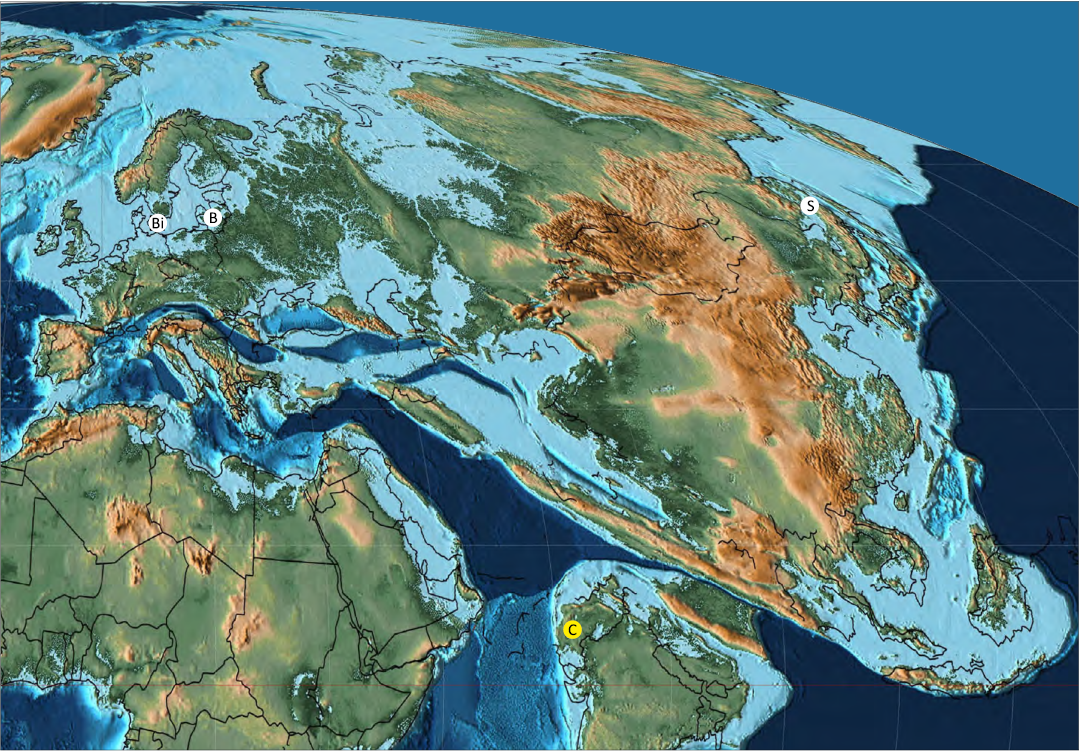
Fig. 1. The Eocene localities with scale insect records. B, Baltic amber, Bi, Bitterfeld amber, C, early Eocene Cambay amber; S, Sakhalinian amber. White circle, Eriococcidae in amber inclusions; yellow circle, Margarodidae. Map modified from Scotese (2014).
Only three fossil species of the family Pseudococcidae are listed by García Morales et al. (2016) namely: Gilderius eukrinops Vea & Grimaldi, 2015, Marmyan barbarae Koteja, 2004, from Burmese amber and Williamsicoccus megalops Vea & Grimaldi, 2015, from Lebanese amber. All of them were described based on adult male morphology (Koteja 2004; Vea and Grimaldi 2015).
The morphology and classification in extant scale insects is based almost entirely on the morphological features of adult females. Adult males live only a few days, which is why they are rarely collected. Moreover, males are unknown in many well studied species (Kosztarab and Kozár 1988). On the other hand, fossil species were described mainly on the basis of characteristics of adult males (Koteja 2000a, b). The described inclusions constitute the only known fossil morph of an adult female from the family Eriococcidae and the first known immature female instar from the Pseudococcidae thus providing unique information on the Eocene evolution of these groups. It is worth emphasizing that both inclusions come from Sakhalinian amber, which is relatively poorly known. No scale insect has been described from Sakhalinian amber until now, however, the youngest (Triassic–Paleocene), representative of Naibioidea Shcherbakov, 2007, considered a sister group of scale insects was described from this amber (Shcherbakov 2007).
Institutional abbreviations.—PIN, Paleontological Institute, Russian Academy of Sciences, Moscow.
Nomenclatural acts.—This published work and the nomenclatural acts it contains have been registered in Zoobank: urn:lsid:zoobank.org:pub:06760052-A8E9-4815-A943-DD FE 5E21B605
Material and methods
Sakhalinian amber is an Eocene fossil from the southern region of Sakhalin containing a vast number of biological inclusions. Approximately 1250 animal inclusions have been reported fossilized inside this resin (Dietrich and Perkovsky 2019). The amber was found in 1972 on the Okhotsk Sea’s (South Sakhalin) beaches by an expedition of the Paleontological Institute RAS (PIN). In situ fossil resin of the same composition was also found near the Naiba River, embedded in coal of the Naibuchi Formation. The age of Sakhalinian amber is still disputed. Zherikhin (1978) estimated its age in a broad range, from the Paleocene (59–56 Ma) to the middle Eocene (47–42 Ma). However, Kodrul (1999) suggested the middle Eocene (47–43 Ma) as the age of the Naibuchi Formation, in which Sakhalinian amber was found in situ. In just the last twelve years, 21 new species, one order and one family of arthropods have been described in this resin (Szadziewski and Sontag 2013; Baranov et al. 2015; Fedotova and Perkovsky 2016; Radchenko and Perkovsky 2016; Marusik et al. 2018; Dietrich and Perkovsky 2019; Kazantsev and Perkovsky 2019; Batelka et al. 2020; Perkovsky et al. 2021; Davidian et al. 2021a,b; Simutnik et al. 2021; Makarkin et al. 2022; Shamshev et al. 2025). Сhironomids and aphids are the most frequently found insects in Sakhalinian amber (Baranov and Perkovsky 2013; Baranov et al. 2015) and aphid parasitoids are the most common hymenopterans in the Lagerstätte (Davidian et al. 2021a, b). Moreover, a single described Sakhalinian amber adult beetle has been proposed as an aphid predator (Kazantsev and Perkovsky 2019). Many of the numerous encyrtids (Hymenoptera) in Sakhalinian amber could be connected with scale insects (Sternorrhyncha: Coccomorpha) (Simutnik 2020; Simutnik et al. 2021; Makarkin et al. 2022). Among the aphid inclusions, two scale insect inclusions were found, including an adult female and an immature female instar.
The specimens were observed under a stereo microscope Leica M205C, Nikon SMZ1500, and a light microscope Nikon Eclipse-E600 (Boston Industries, Boston, MA, USA). Photographs were taken under the Nikon Eclipse E-600 biological microscope with a Nikon DS-Fi2 digital camera and NIS Elements software (version 4.2, D 4.13.05 64, Nikon, Japan) in the Institute of Biology, Biotechnology and Environmental Protection, Faculty of Life Sciences, University of Silesia in Katowice, Poland. Drawings were prepared using the Paint.NET.
Two specimens were examined: one specimen of adult female and one specimen of immature female instar. The fossil specimens described here are housed in the Paleontological Institute, Russian Academy of Sciences (PIN) in Moscow. Systematics follows García Morales et al. (2016).
Systematic palaeontology
Order Hemiptera Linnaeus, 1758
Suborder Sternorrhyncha Amyot & Audinet-Serville, 1843
Infraorder Coccomorpha Chou, 1963
Family Eriococcidae Cockerell, 1899
Subfamily Rhizococcinae Kozár et al., 2013
Genus Podococcus Kalandyk-Kołodziejczyk & Wegierek gen. nov.
Zoobank LSID: urn:lsid:zoobank.org:act:D5A95926-F1EA-40B1-8B 39-564A644180D1
Type species: Podococcus elzbietae Kalandyk-Kołodziejczyk & Wegierek sp. nov., monotypic, see below.
Etymology: Named in honour of Elżbieta Podsiadło, professor emerita of the Warsaw University of Life Sciences, as combination of first letters of her surname, and coccus often used in the generic names of scale insects.
Diagnosis.—As for the monotypic type species.
Podococcus elzbietae Kalandyk-Kołodziejczyk & Wegierek gen. et sp. nov.
Fig. 2.
Zoobank LSID: urn:lsid:zoobank.org:act:CF42DB7A-FDC0-453C-92 D1-240D43B269D0
Etymology. In honour of Elżbieta Podsiadło.
Holotype: PIN 806Aa; adult female.
Type locality: Okhotsk Sea coast in South Sakhalin, Russia.
Type horizon: Sakhalinian amber, Naibuchi Formation, middle Eocene.
Diagnosis.—8-segmented antennae with very long apical setae, subapical setae shorter than apical setae, but considerably longer than others, apical segment with 7 hair-like setae and 3 antennal bristles, antennal bristles present on the last 3 segments, legs well developed, tarsal digitules knobbed significantly longer than claw digitules, claw without denticle, claw digitules knobbed, a few disc pores visible on both body surfaces near the body margin, disc pores present also on ventral surface of head, cruciform pores absent, macrotubular ducts scattered on the margins of venter of abdominal segments and forming rows in the middle of ventral surface of abdomen, enlarged conical setae on entire body margin, 3–4 conical setae on each abdominal segment, anal lobes prominent with 3 enlarged setae each, 1 of which robust with truncate apex and 2 slender similar to marginal setae with acute apex, 2 of these setae on inner margin and 1 seta on outer margin, anal ring with 4 pairs of setae.
Material.—Holotype only.
Description.—Body elongated 1.25 mm; 0.59 mm wide. Antennae 8-segmented, situated close together, on the ventral side of the head, at some distance from the frontal edge of the body (Fig. 3). Antennal segments: I the widest, 28.50 μm long, 32.23 μm wide; II 35.42 μm long, 21.55 μm wide; III 20.62 μm long, 24.01 μm wide; IV 20.53 μm long, 18.17 μm wide; V 21.91 μm long, 16.11 μm wide; VI 19.22 μm long, 17.05 μm wide; VII 20.44 μm long, 13.49 μm wide; VIII 37.74 μm long, 11.80 μm wide. All antenna segments covered with hair-like setae. Antennal bristles present on the last 3 segments. Apical segment with 7 hair-like setae and 3 antennal bristles. The apical and subapical setae the longest, 65.22–66.86 μm long and 58.86–59.19 μm long respectively. A single hair-like seta near the apex shorter than the apical and subapical setae but considerably longer than the others, 40.49–40.93 μm long. Other hair-like setae situated above half the length of the segment, 27.45–29.93 μm long. Two bristles located slightly below the apex, almost subequal in length 27.17–28.54 μm long, near each other; third bristle almost in the middle of the segment’s length, laterally, considerably longer than other bristles, 37.67 μm long. Segment VII with 2 hair-like setae laterally on both sides and 1 bristle in the middle of the segment’s length. Segment VI with 2 hair-like setae and 1 antennal bristle, all setae near the distal edge of the segment. Segment V with 1 very long hair-like seta laterally, in the middle of the segment. Segment IV with 1 hair-like seta next to the distal edge. Segment III without setae. Pedicel with at least 2 setae. Scapus broad, triangular with 3 setae near the distal edge of the segment. Intersegmental membranes distinct, very well visible between segments IV and V, V and VI, VI and VII and VII and VIII, between 5.30 and 17.58 μm long. Eyes well developed, located on venter near body margin. Frontal lobes not observed. Clypeolabrum and labium not visible.
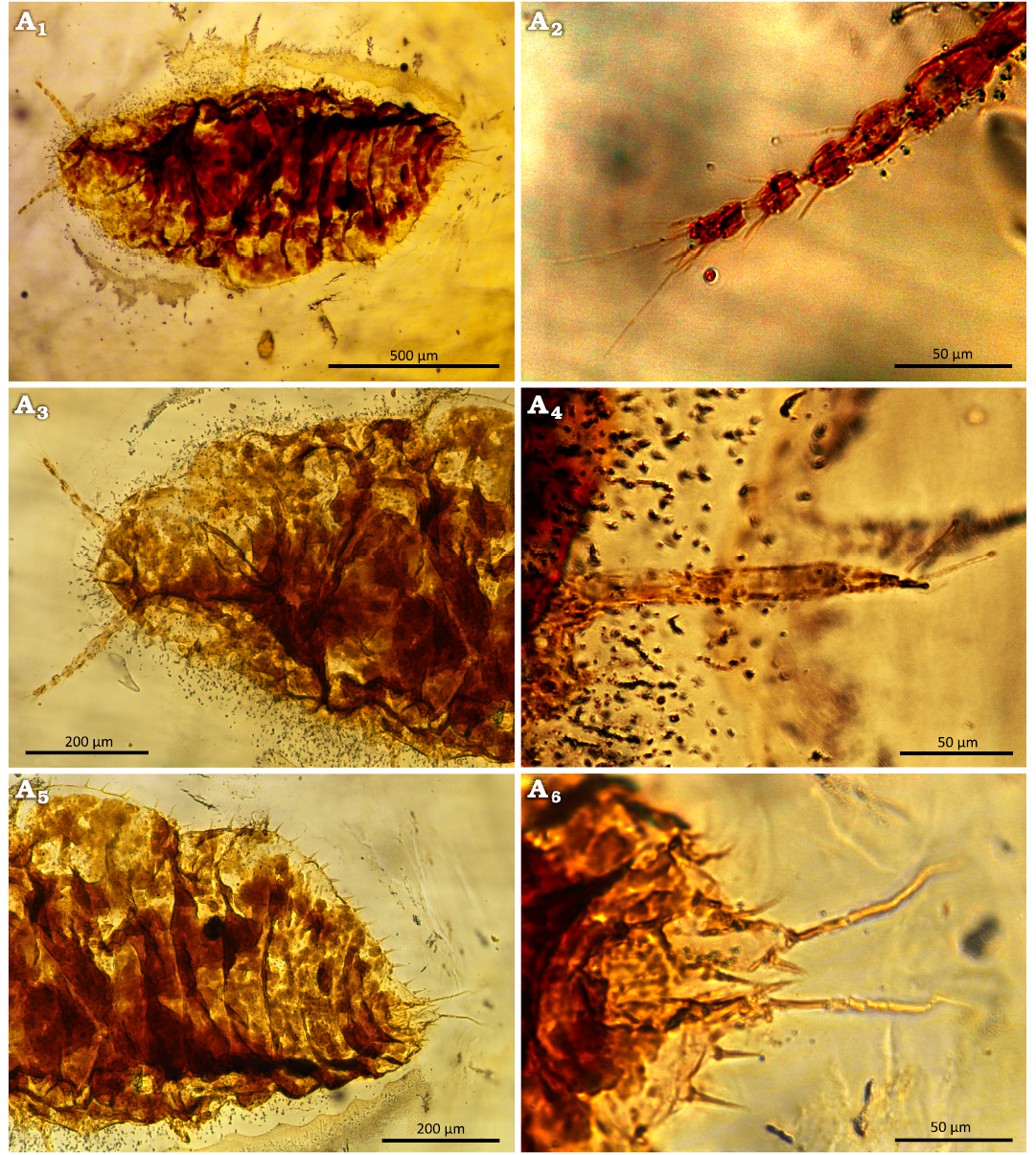
Fig. 2. Adult female of eriococcid scale insect Podococcus elzbietae Kalandyk-Kołodziejczyk & Wegierek gen. et sp. nov., holotype (PIN 806Aa), Okhotsk Sea’s beach, South Sakhalin, Middle Eocene. Habitus in ventral view (A1), antenna (A2), head (A3), tarsus with knobbed tarsal and claw digitules (A4), abdomen with marginal setae (A5), anal lobes with enlarged setae and apical setae (A6).

Fig. 3. Antenna of adult female of eriococcid scale insect Podococcus elzbietae Kalandyk-Kołodziejczyk & Wegierek gen. et sp. nov.; drawing based on holotype (PIN 806Aa).
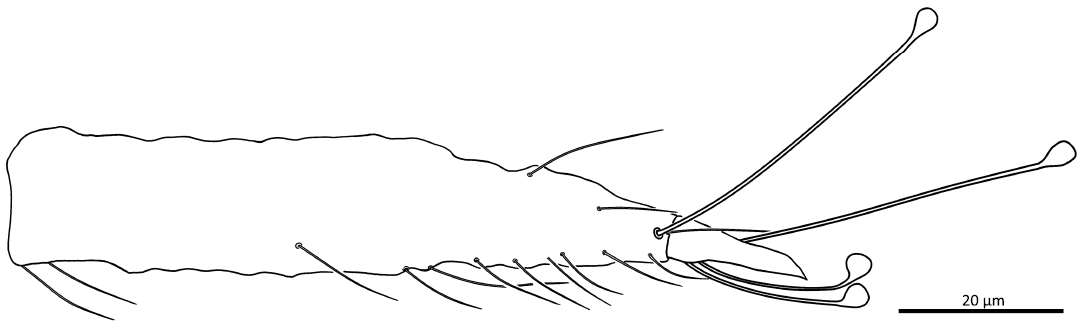
Fig. 4. Tarsus of adult female of eriococcid scale insect Podococcus elzbietae Kalandyk-Kołodziejczyk & Wegierek gen. et sp. nov. with knobbed tarsal and claw digitules and claw without denticle; drawing based on holotype (PIN 806Aa).
Legs well developed. Tibia-tarsus segmentation distinct. Tibia slightly longer than tarsus, 98.56 μm long, 17.78 μm wide; tarsus 92.41 μm long, 16.68 μm wide. Inner side of tarsus with at least 10 setae, outer side with at least 2 setae, setae hair-like. Tarsal digitules knobbed, very long, 39.95 μm long. Claw elongated, without a denticle, 14.79 μm long. Claw digitules knobbed, longer than the claw, 20.66 μm long (Fig. 4).
Some hair-like setae visible on venter, scattered on the whole surface. A few disc pores visible on both body surfaces near the body margin, disc pores present also on ventral surface of head, cruciform pores absent, macrotubular ducts scattered on the margins of venter of abdominal segments and forming rows in the middle of ventral surface of abdomen. Enlarged conical setae on entire body margin. No enlarged setae on dorsum except for marginal setae and anal lobe setae. Marginal enlarged setae arranged in a single row along the entire body margin, slender with an acute apex; setae on head the thinnest, 22.10–22.67 μm long (lengths of setae without a socket); thoracic setae thicker, 23.11–23.78 μm long; abdominal setae thickest and longest, 28.36–29.45 μm long. Three–four enlarged setae on each abdominal segment. The base (socket) of each marginal seta enlarged, especially of abdominal setae, 3.11–3.31 μm long. Anal ring well developed, with a single row of hardly visible pores, situated on the dorsal margin of the body, oval, sclerotised, 64.75 μm long, 50.3 μm wide; with 8 setae sub-equal in length, 59.03 μm long. Anal tube not visible. Anal lobes well developed, sharply pointed, with long hair-like apical setae at terminal positions, 75.9 μm long. Anal lobes with 3 enlarged setae, 1 of which robust with truncate apex and 2 slender similar to marginal setae with acute apex, 2 of these setae on inner margin and 1 seta on outer margin. Base of anal lobes not fused.
Geographic and stratigraphic range.—Amber from the Okhotsk Sea’s beach, (South Sakhalin) Naibuchi Formation (middle Eocene).
Family Pseudococcidae Heymons, 1915
Pseudococcidae indet.
Fig. 5.
Material.—PIN 806Ab; immature female instar from Sakhalinian amber, Naibuchi Formation, middle Eocene at Okhotsk Sea coast in South Sakhalin, Russia.
Description.—Body significantly shrunk, so the length is not determinable, 0.25 mm wide.
Antennae 6-segmented, situated close together, on the ventral side of the head, near body margin (Fig. 6). Antennal segments: scapus the widest, 16.96 μm long, 20.76 μm wide; II, 22.74 μm long, 6.19 μm wide; III, 20.09 μm long, 6.92 μm wide; IV, 23.75 μm long, 8.19 μm wide; V, 22.45 μm long, 13.06 μm wide; VI, 70.03 μm long, 20.68 μm wide. All antenna segments covered with hair-like setae. Antennal bristles present on apical segment. Apical segment with 10 hair-like setae and 4 antennal bristles. Apical seta the longest 52.92 μm long, subapical 38.24 μm long. 2 bristles almost subequal in length about 22.14 μm long located near the apex, next to each other; 1 bristle located lower, 19.66 μm long. Fourth bristle the thickest and longest, 32.50 μm long, situated below the mid-length of the segment, closer to the proximal end. Segment V with 3 hair-like setae. Segment IV without setae. Segment III with 2 hair-like setae located above half the length of segment, 1 of them very long. Pedicel with at least 1 seta. Scapus with at least 1 seta located near the distal edge of the segment. Clypeolabrum and labium not visible.
Legs well developed. Coxa enlarged, 19.98 μm long, trochanter 14.50 μm long, 17.21 mm wide. Femur 55.79 μm long, 35.18 μm wide. Tibia-tarsus segmentation distinct. Tibia shorter than tarsus, 31.92 μm long, 24.41 μm wide. Tarsal digitules knobbed, 21.28 μm long, significantly longer than claw digitules. Tarsus 51.70 μm long, 20.78 μm wide, widest at the proximal part, tapered at the distal edge. Inner side of tarsus with at least 3 setae, outer side with at least 2 setae, setae hair-like. Claw curved, with denticle, 13.88 μm long. Claw digitules knobbed, longer than claw, 15.16 μm long (Fig. 7).
Anal lobes well-developed. Apical seta in terminal position, 92.41 μm long. Subapical setae considerably shorter 43.74–44.60 μm long. Anal ring well developed, 54.17 μm wide, with presumably double row of pores, with 6 setae, 47.80–48.63 μm long. Tubular ducts visible on the dorsal surface of the last abdominal segments, numerous, located at the margin.
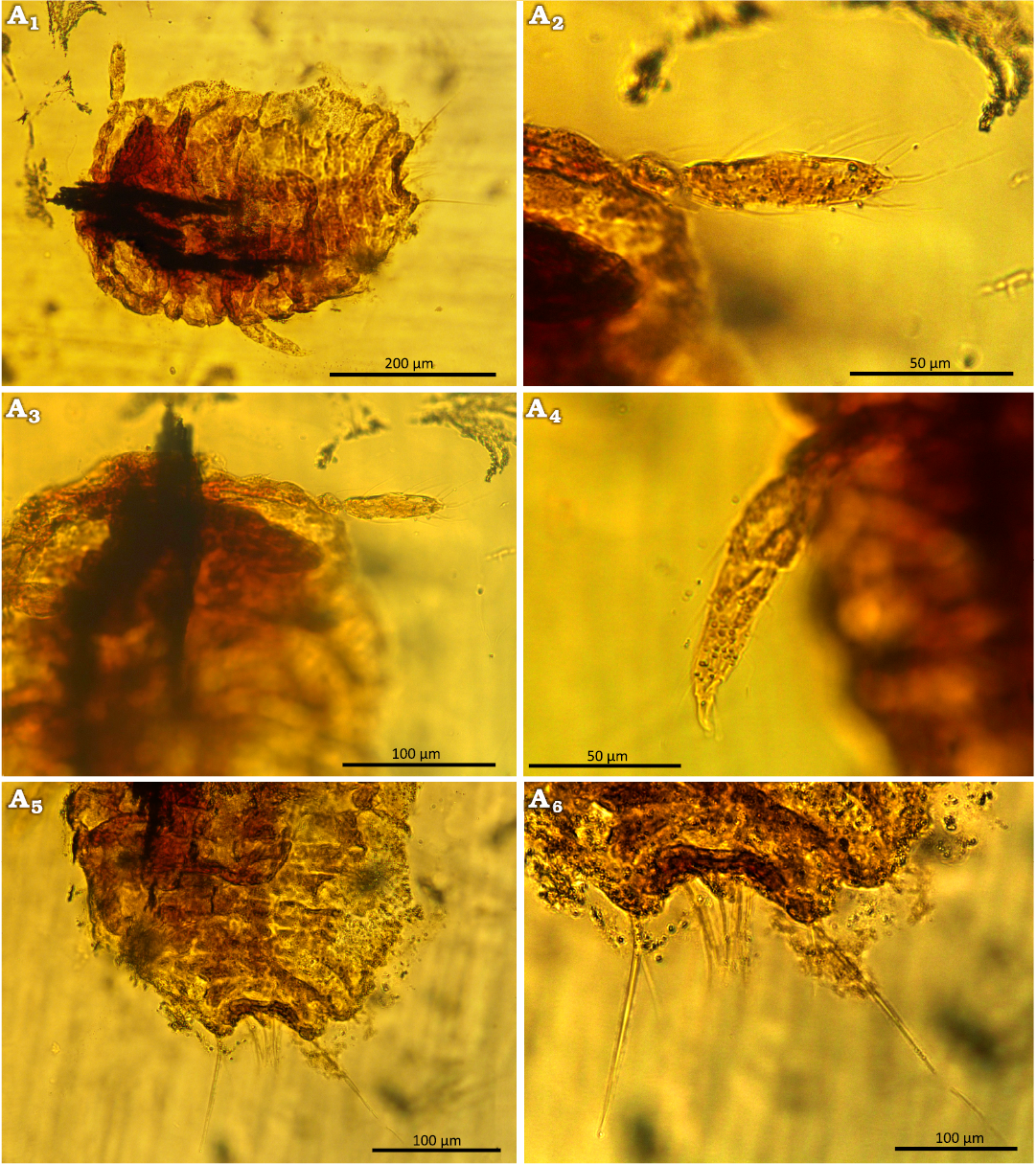
Fig. 5. Pseudococcidae indet., immature female instar (PIN 806Ab), Okhotsk Sea’s beach, South Sakhalin, Middle Eocene. Habitus in dorsal view (A1), apical segment of antenna (A2), head (A3), tarsus with knobbed tarsal and claw digitules (A4), anal lobes (A5), tubular ducts on the body margin (A6).
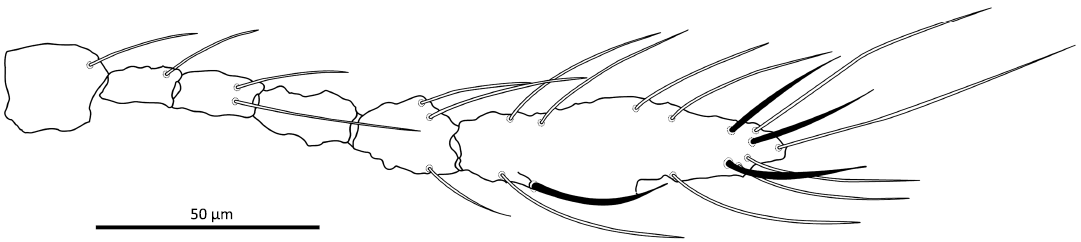
Fig. 6. Antenna of Pseudococcidae indet., immature female instar; drawing based on holotype (PIN 806Ab).
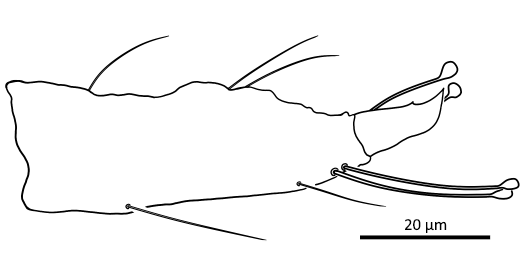
Fig. 7. Tarsus of Pseudococcidae indet., immature female instar with knobbed tarsal and claw digitules and claw with denticle; drawing based on holotype (PIN 806Ab).
Discussion
According to García Morales et al. (2016), there are 90 known fossil species of scale insects. However, a thorough analysis of the literature has shown that 96 fossil species have been described so far (e.g., Koteja and Azar 2008; Vea and Grimaldi 2012, 2015; Wang et al. 2015; Lin et al. 2018; Vršanský et al. 2025). Majority of species (71) were described based on the morphology of adult males (e.g., Koteja 1984, 1986, 2004; Koteja and Poinar 2001). The majority of them is known from amber inclusions, and only some species were described on the basis of impressions (Koteja 1988a, 1989, 1999). Eleven fossil species have been described based on the adult female morphology, belonging to the families Diaspididae, Matsucoccidae, Ortheziidae, and Rhizoecidae (Koch and Berendt 1854; Pampaloni 1902; Koteja and Żak-Ogaza 1988a, b; Johnson et al. 2001; Vea and Grimaldi 2012; Wang et al. 2015; Poinar et al. 2020). Koteja and Żak-Ogaza (1988a) discussed the status of Ochyrocoris electrina Menge, 1856, concluding that the size of the organism is too small to be an adult. However, the presence of 8 antennal segments does not correspond with those found in immature individuals, suggesting the specimen to be an adult female. Unfortunately, no drawing was made by Menge (1856) and the type material is presumably lost (Koteja and Żak-Ogaza 1988a). In three species of the family Matsucoccidae (Matsucoccus electrinus Koteja, 1984, Matsucoccus larssoni Koteja, 1984, and Matsucoccus pinnatus [Germar & Berendt, 1856]) females were assigned to the same species as males. Moreover, the first instar nymph was also assigned to the last species (Koteja 1984). In most of the females described from ambers, microscopic cuticular features including pores and ducts were not observed (e.g., Koteja and Żak-Ogaza 1988a; Johnson et al. 2001; Vea and Grimaldi 2012; Wang et al. 2015).
Thirteen fossil species were described based on immature instar morphology. They represent the families: Eriococcidae, Kermesidae, Kuwaniidae, Labiococcidae, Ortheziidae, and Xylococcidae. Some of them are first-instar nymphs called crawlers (Koteja 1988b, 2000a, b, 2008; Vea and Grimaldi 2012; Gao et al. 2019).
Classification and taxonomy of extant scale insects are based almost entirely on the morphological features of adult females (Kosztarab and Kozár 1988). Adult males are often assigned to the same species as females on the basis of their biology e.g., when observed during copulation (Koteja 1984). It is worth emphasizing that the morphological features of adult females are very important in the classification of scale insects, especially when the immature stages of families considered to be closely related are very similar, as is the case with the families Eriococcidae and Kermesidae. Even though the first and second nymphal stages of both families are similar, eriococcid adult females differ significantly from those of kermesids (Miller and Miller 1993).
On the other hand, the immature stages have features that are not present in adult females and vice versa (Gullan 2000). The nymphs of species whose adult females show a significant similarity may have distinguishing features useful in identifying the species. The morphology of nymphs can provide good support for the identification of species and genera (Kosztarab and Kozár 1988). Available keys for identifying species based on larval features prove the importance of morphological features of these stages in understanding species (Gullan 2000; Miller and Stocks 2022). The morphological characters of nymphs of Eriococcidae and Pseudococcidae have not been studied in many species. The family Eriococcidae (felt scales) is considered to be non-monophyletic on the basis of studies of adult female and male morphology, as well as molecular analysis (Cox and Williams 1987; Cook and Gullan 2001; Cook et al. 2002; Hodgson 2002; Gullan and Cook 2007). According to Koteja (1974) and Miller and Gimpel (2000) the phylogenetic relations of the Eriococcidae can be considered as complicated. Recently, the family comprises 681 species and 107 genera (García Morales et al. 2016). Many new species have been described over the past twenty-five years, as Miller and Gimpel (2000) reported 554 species within this family. The Eriococcidae has the greatest number of genera and species in the Palearctic Region, followed by the Neotropical. Previously, over 150 Palearctic species were assigned to the genus Eriococcus Targioni Tozzetti, 1868, but were later assigned to other genera (Hodgson and Miller 2010; Kozár et al. 2013). Currently, the most speciose eriococcid genus is Acanthococcus with 216 identified species (García Morales et al. 2016).
There are different opinions regarding the systematic position of the Eriococcidae family among coccidologists. Koteja (1974) on the basis of the morphology of labium, recognized the family group Acanthococcidae including seven families (Acanthococcidae, Dactylopiidae, Apiomorphidae, Kermesidae, Cerococcidae, Calycicoccidae, Cryptococcidae) and one Kuwanina group. Kozár et al. (2013) recognized the group of four families called “Acanthococcidae family group” that consists of: the Acanthococcidae, Cryptococcidae, Eriococcidae, and Kuwaninidae. According to García Morales et al. (2016) representatives of the families Acanthococcidae, Eriococcidae, and Kuwaninidae sensu Miller and Gimpel (2000) are currently assigned to one family: Eriococcidae.
So far, only five first-instars of fossil eriococcids from the Eocene Baltic amber have been described (Koteja 1988b), one eriococcid larva from the Late Cretaceous New Jersey amber (Koteja 2000a) and one adult male from the Baltic amber (Koteja 1988c). One species described on the basis of an adult male, Cancerococcus apterus Koteja, 1988, and previously assigned to the Eriococcidae (Koteja 1988c) was later transferred into Margarodidae sensu lato (Miller and Gimpel 1999) and is currently considered as a Pityococcidae (Garcia Morales et al. 2016). Undetermined eriococcid immature instars were also observed (Koteja 2000a).
The characteristic feature of adult females of the family Eriococcidae is the presence of anal lobes, which are prominent and easily observable (Kozár et al. 2013). Anal lobes are degraded or absent only in some genera (Kozár et al. 2013). The adult female of Podococcus elzbietae Kalandyk-Kołodziejczyk & Wegierek gen. et sp. nov. from Sakhalinian amber has well developed anal lobes. Another character often used for species level identification, enlarged setae on the anal lobes of the eriococcids, are present in the studied specimen. The relative length of the legs in comparison to the rest of the body and the presence of 8-segmented antennae also indicate that the described specimen is an adult female. According to Kozár et al. (2013) and Miller and Stocks (2022) immature instars possess 6- or 7-segmented antennae. The anal ring in the specimen from Sakhalinian amber is equipped with 4 pairs of setae which is characteristic of the many representatives of the Eriococcidae (Kozár et al. 2013). The antennae in the Eriococcidae are most often described briefly in the species descriptions, providing only the number of segments and their entire lengths. Moreover, sometimes the lengths of the individual segments are also provided, as well as general description of the appearance of the antennal sensilla (e.g., Hoy 1962; Williams 1985a, b; Hodgson and Millar 2002; Kozár et al. 2013). There are also descriptions with many more details about the arrangement and appearance of the antennal setae (e.g., Kondo et al. 2006; Kaydan and Kozár 2010; Erkılıç et al. 2011). The number of segments of the antennae is considered a character of taxonomic value and it is used to separate genera (Hodgson and Miller 2010) or species (Kondo et al. 2006). According to Rościszewska (1989), eriococcid adult females have 6–7-segmented antennae, whereas Miller and Gimpel (2000) stated that adult females of the family Eriococcidae possess 3–7-segmented antennae, although species with 8-segmented antennae occur in some species. The study using a light microscope conducted by Rościszewska (1989) on the antennae of several species of the Eriococcidae revealed that there are differences in the distribution and number of antennal sensilla in different taxa, therefore, information on the exact distribution of sensilla is, in our opinion, very important in the description of new species. To the best of our knowledge, there are no known published studies on the antennae of any eriococcid species using a scanning microscope (SEM). Preliminary studies using SEM have shown that the antennae of females of this family are morphologically diverse in terms of the number and length of segments, as well as the presence and length of antennal sensilla (Małgorzata Kalandyk-Kołodziejczyk and Jolanta Brożek unpublished data). A detailed description of the antennae of an adult female provides important information that allows them to be compared with other species.
Two groups are distinguished within the eriococcids taking into account their feeding habitats: “woody feeding group” or Acanthococcinae and “herbaceous feeding group” or Rhizococcinae. The adult female from Sakhalinian amber seems to belong to the subfamily Rhizococcinae, which is characterized by the presence of strong spines on the body margin and sometimes on the anterior part of dorsum but otherwise absent on the dorsum (Kozár et al. 2013). In the specimen from Sakhalinian amber there are enlarged conical setae on the entire body margin, but no enlarged setae are observed on the dorsum. The presence of short microtubular ducts which is the other feature which distinguishes this subfamily has not been observed. On the other hand, the adult female of the subfamily Acanthococcinae can be characterised by the presence of strong spines on the entire dorsum as well as on the body margins.
The Pseudococcidae (mealybugs) is the second largest family of scale insects consisting of 2066 species in 264 genera (García Morales et al. 2016). The classification of this family has changed over the time. Koteja (1974) distinguished four subfamilies within the Pseudococcidae: Trabutininae, Pseudococcinae, Rhizoecinae, and Sphaerococcinae. According to Downie and Gullan (2004) three subfamilies were recognized, namely Pseudococcinae, Rhizoecinae, and Phenacoccinae. Two subfamilies were distinguished within the Pseudococcidae on the basis of molecular studies (Hardy et al. 2008). Later, the Rhizoecinae were elevated to the family level (Hodgson 2012), based on the adult male morphology. Currently, Choi and Lee (2022) inferred a higher classification for Pseudococcidae based on molecular phylogeny and endosymbionts, and recognized three subfamilies: Phenacoccinae, Rastrococcinae, and Pseudococcinae.
So far, only three fossil species of the family Pseudococcidae are listed by García Morales et al. (2016) and all of them were described on the basis of adult males. It is worth emphasizing that one species Marmyan barbarae Koteja, 2004, was described by Koteja (2004) as species incertae sedis. According to Koteja (2004) this species resembles adult males of some extant families, but he did not assign it to any family.
Adult females of the family Pseudococcidae possess 2–9-segmented antennae, sometimes reduced to 1–3 segments in some genera, e.g., Antonina Signoret, 1875, and Chaetococcus Maskell, 1898. Immature instars are characterized by the presence of 6–8-segmented antennae. The anal ring is usually equipped with 6 setae, but sometimes there are more anal ring setae. Anal lobes are often protruding but their general appearance is completely different from that of the members of the Eriococccidae family and no enlarged setae are present (Kosztarab and Kozár 1988; Willliams 1985b). On the other hand, there are anal lobe setae that can be of variable length. The characteristic features of the adult females and nymphs of the Pseudococcidae are the presence of cuticular structures such as trilocular pores, multilocular pores and tubular ducts (Danzig and Gavrilov-Zimin 2014, 2015). Several pores were visible in fossil specimen and tubular ducts were observed on the last abdominal segments of the ventral surface. According to Cook and Gullan (2001) the presence of these ducts is characteristic of some representatives of the families Eriococcidae, Pseudococcidae, and Coccidae. Although these structures are similar in morphology in all these families, they are not identical (Cook and Gullan 2001). The mere presence of these ducts does not clearly indicate the belonging to any of these families, but the occurrence of other features (characteristic anal lobes, anal ring with 6 setae, anal lobe with apical setae) seems to suggest that this immature female instar belongs to the family Pseudococcidae. We did not assigned this specimen to a species due to the insufficient degree of preservation of the fossil material. We believe that due to the unique nature of the examined material, describing this specimen as a female nymph from the Pseudococcidae family will provide important information about the occurrence of scale insects in the Eocene.
The antennae of Pseudococcidae were studied using a light microscope by Kaydan and Kozar (2010). Unlike the Eriococcidae family, the antennae of a few members of this family have been analyzed using a scanning electron microscope (Abd El-Ghany et al. 2022; Ning et al. 2024). These studies revealed significant differences in the distribution and morphology of the antennae of the studied species.
Conclusions
We described coccomorph specimens representing the Eriococcidae and Pseudococcidae, which are the first known scale insects from Sakhalinian amber. Both specimens display features that are characteristic of these families, respectively. Both the immature stages described from Baltic amber (Koteja 1988b) and the adult female from Sakhalinian amber that belong to the Eriococcidae have characteristic anal lobes and enlarged conical setae along the body margin. The immature female instar of the family Pseudococcidae is characterized, e.g., by the presence of dorsal tubular ducts. The occurrence of these morphological characters indicates the presence of all the features characteristic of these families in the Eocene scale insects.
Authors’ contributions
Conceptualization, methodology, and investigation, PW, BO, EP, and MK-K; validation, resources, and data curation, PW and MK-K; formal analysis and visualization, BO and MK-K; writing—original draft preparation, PW, EP, and MK-K; writing—review and editing, PW, BO, and MK-K; supervision, BO and EP. All authors have read and agreed to the published version of the manuscript.
Acknowledgments
We are grateful to Irina D. Sukacheva (PIN) for her constant attention to amber research and their invaluable contribution to studying the entomofauna of Sakhalinian amber. We also appreciate the huge role played in this field by the late Vladimir. V. Zherikhin (PIN). Authors would like to thank Marzena Zmarzły (Institute of Biology, Biotechnology and Environmental Protection, Faculty of Natural Sciences, University of Silesia, Katowice) and Sandra Gocel (Katowice, Poland) for preparing the drawings. We are also grateful to Krzysztof Kudła (Institute of Biology, Biotechnology and Environmental Protection, Faculty of Natural Sciences, University of Silesia, Katowice) for technical support. We would like to thank the Reviewers whose valuable comments helped to improve our manuscript. We would like to thank David Morgado (Vila Nova de Gaia, Portugal) for correcting the English version of our manuscript.
Editor: Andrzej Kaim
References
Abd El-Ghany, N.M., Zhou, J.-J., and Dewer, Y. 2022. Antennal sensory structures of Phenacoccus solenopsis (Hemiptera: Pseudococcidae). Frontiers in Zoology 19: 1–14. Crossref
Baranov, V., Andersen T., and Perkovsky, E.E. 2015. Orthoclads from Eocene amber from Sakhalin (Diptera: Chironomidae, Orthocladiinae). Insect Systematics & Evolution 46: 359–378. Crossref
Baranov, V. and Perkovsky, E.E. 2013. New chironomids from Eocene Sakhalinian amber (Diptera; Chironomidae; Orthocladiinae). Terrestrial Arthropod Reviews 6: 61–69. Crossref
Batelka, J., Perkovsky, E.E., and Prokop, J. 2020. Diversity of Eocene Ripiphoridae with descriptions of the first species of Pelecotominae and larva of Ripidiinae (Coleoptera). Zoological Journal of the Linnean Society 188: 412–433. Crossref
Choi, J. and Lee, S. 2022. Higher classification of mealybugs (Hemiptera: Coccomorpha) inferred from molecular phylogeny and their endosymbionts. Systematic Entomology 47: 354–370. Crossref
Cook, L.G. and Gullan, P.J. 2001. Are the enlarged ducts of Eriococcus (Hemiptera: Coccoidea: Eriococcidae) plesiomorphic? Entomologica 33: 59–66.
Cook, L.G., Gullan, P.J., and Trueman, H.E. 2002. A preliminary phylogeny of the scale insects (Hemiptera: Sternorrhyncha: Coccoidea) based on nuclear small-subunit ribosomal DNA. Molecular Phylogenetics and Evolution 25: 43–52. Crossref
Cox, J.M. and Williams, D.J. 1987. Do the Eriococcidae form a monophyletic group. Bollettino del Laboratorio di Entomologia Agraria Filippo Silvestri, Portici 43: 13–17.
Danzig, E.M. and Gavrilov-Zimin, I.A. 2014. Palaearctic Mealybugs (Homoptera: Coccinea: Pseudococcidae), Part 1: Subfamily Phenacoccinae. 678 pp. Zoological Institute of Russian Academy of Sciences: St. Petersburg, Russia.
Danzig, E.M. and Gavrilov-Zimin, I.A. 2015. Palaearctic Mealybugs (Homoptera: Coccinea: Pseudococcidae), Part 2: Subfamily Pseudococcinae. 619 pp. Zoological Institute of Russian Academy of Sciences: St. Petersburg, Russia.
Davidian, E.M., Kaliuzhna, M.O., and Perkovsky, E.E. 2021a. First aphidiine species from Sakhalinian amber. Acta Palaeontologica Polonica 66: 59–65. Crossref
Davidian, E.M., Manukyan, A.R., and Belokobylskij, S.A. 2021b. New aphidiine genus from Sakhalinian amber. Palaeoentomology 4: 537–543. Crossref
Dietrich, C.H. and Perkovsky E. 2019. First record of Cicadellidae (Insecta, Hemiptera, Auchenorrhyncha) from Eocene Sakhalinian amber. Zookeys 886: 127–134. Crossref
Downie, D.A. and Gullan, P.J. 2004. Phylogenetic analysis of mealybugs (Hemiptera: Coccoidea: Pseudococcidae) based on DNA sequences from three nuclear genes, and a review of the higher classification. Systematic Entomology 29: 238–259. Crossref
Erkılıç, L.B., Kaydan, M.B., and Kozár, F. 2011. Description of a new species of Eriococcidae (Hemiptera: Coccoidea) from Turkey. Turkish Journal of Entomology 35: 15–22. Crossref
Fedotova, Z.A. and Perkovsky, E.E. 2016. A new genus and species of gall midges of the supertribe Heteropezidi (Diptera, Cecidomyiidae) found in Eocene amber from Sakhalin. Journal of Paleontology 50: 1033–1037. Crossref
García Morales, M., Denno, B.D., Miller, D.R., Miller, G.L., and Ben-Dov, Y. 2016. Hardy, N.B. ScaleNet: A literature-based model of scale insect biology and systematics. Database https://scalenet.info/catalogue/ (access 12.12.2025)
Gao, T., Yin, X., Shih, C., Rasnitsyn, A.P., Xu, X., Chen, S., Wang, C., and Ren, D. 2019. New insects feeding on dinosaur feathers in mid-Cretaceous amber. Nature Communications 10: 1–8.
Gullan, P.J. 2000. Identification of the immature instars of mealybugs (Hemiptera: Pseudococcidae) found on citrus in Australia. Australian Entomologist 39: 160–166. Crossref
Gullan, P.J. and Cook, L.G. 2007. Phylogeny and higher classification of the scale insects (Hemiptera: Sternorrhyncha: Coccoidea). Zootaxa 1668: 413–425. Crossref
Hardy, N.B., Gullan, P.J., and Hodgson, C.J. 2008.A subfamily-level classification of mealybugs (Hemiptera: Pseudococcidae) based on integrated molecular and morphological data. Systematic Entomology 33: 51–71. Crossref
Hodgson, C.J. 2002. Preliminary phylogeny of some non-margarodid Coccoidea (Hemiptera) based on adult male characters. Bollettino di Zoologia Agraria e di Bachicoltura 33: 129–137.
Hodgson, C.J. 2012. Comparison of the morphology of the adult males of the rhizoecine, phenacoccine and pseudococcine mealybugs (Hemiptera: Sternorrhyncha: Coccoidea), with the recognition of the family Rhizoecidae Williams Zootaxa 3291: 1–79. Crossref
Hodgson, C.J. and Millar, I.M. 2002. A new genus and two new species of felt scales (Hemiptera: Coccoidea: Eriococcidae) from Chile, with comments on zoogeographical affinities between the eriococcid faunas of southern South America and New Zealand. Systematic Entomology 27: 191–209. Crossref
Hodgson, C.J. and Miller, D.R 2010. A review of the Eriococcid Genera (Hemiptera: Sternorrhyncha: Coccoidea) of South America. Zootaxa 2459: 1–101. Crossre
Hoy, J.M. 1962. Eriococcidae (Homoptera: Coccoidea) of New Zealand. Bulletin-New Zealand Department of Scientific and Industrial Research 146: 1–219.
Johnson, C., Agosti, D., Delabie, J.H.C., Dumbert, K., Williams, D.J., Von Tschirnhaus, and M., Maschwitz, U. 2001. Acropyga and Azteca ants (Hymenoptera: Formicidae) with scale insect (Sternorrhyncha: Coccoidea): 20 million years of intimate symbiosis. American Museum Novitates (New York) 23335: 1–18
Kaydan, M.B. and Kozár, F. A. 2010. review of the genus Neoacanthococcus Borchsenius (Hemiptera: Coccoidea: Eriococcidae) with a description of Neoacanthococcus atlihani sp. nov. in Turkey. Turkish Journal of Entomology 34: 165–177.
Kazantsev, S.V. and Perkovsky, E.E. 2019. A new genus of soldier beetles (Insecta: Coleoptera: Cantharidae: Cantharinae) from Sakhalinian amber. Paleontological Journal 53: 300–304. Crossref
Koch, C.L. and Berendt, G.C. 1854. Die im Bernstein befindlichen Crustaceen, Myriapoden, Arachiden und Apteren der Vorwelt. 124 pp. Nicolai, Berlin.
Kodrul, T.M. 1999. Paleogene phytostratigraphy of the south Sakhalin. Transactions of the Geological Institute, Russian Academy of Science 519: 1–148.
Kondo, T., Hardy, N.B., Cook, L.G., and Gullan, P.J. 2006. Description of two new genera and species of Eriococcidae (Hemiptera: Coccoidea) from southern South America. Zootaxa 1349: 19–36. Crossref
Kosztarab, M.P. and Kozár, F. 1988. Scale Insects of Central Europe. 456 pp. Akadémiai Kiadó: Budapest, Hungary. Crossref
Koteja, J. 1974. Comparative studies on the labium in the Coccinea (Homoptera). Zeszyty Naukowe Akademii Rolniczej w Warszawie, Rozprawy Naukowe 89: 1–162.
Koteja, J. 1984. The Baltic amber Matsucoccidae (Homoptera, Coccinea). Annales Zoologici 37: 437–496.
Koteja, J. 1986. Matsucoccus saxonicus sp. n. from Saxonian amber (Homoptera, Coccinea). Deutsche Entomologische Zeitschrift 33: 55–63. Crossref
Koteja, J. 1988a. Eomatsucoccus gen. n. (Homoptera, Coccinea) from Siberian Lower Cretaceous deposits. Annales Zoologici 42: 141–163.
Koteja, J. 1988b.Eriococcid crawlers (Homoptera, Coccinea) from Baltic amber. Polskie Pismo Entomologiczne 58: 503–524.
Koteja, J. 1988c. Two new eriococcids from Baltic Amber. Deutsche Entomologische Zeitschrift 35: 405–416. Crossref
Koteja, J. 1989. Baisococcus victoriae gen. et sp. n.—a Lower Cretaceous coccid (Homoptera, Coccinea). >ActaZoologica Cracoviensia 32: 93–105.
Koteja, J. 1999. Eomatsucoccus andrewi sp. nov. (Hemiptera: Sternorrhyncha: Coccinea) from the Lower Cretaceous of southern England. Cretaceous Research 20: 863–866. Crossref
Koteja, J. 2000a. Scale insects (Homoptera, Coccinea) from Upper Cretaceous New Jersey amber. Backhuys Publishers Leiden, The Netherlands. In: D. Grimaldi (ed.), Studies on Fossils in Amber, with Particular Reference to the Cretaceous New Jersey, 147–229. Backhuys, Leiden.
Koteja, J. 2000b. Advances in the study of fossil coccids (Hemiptera: Coccinea). Polskie Pismo Entomologiczne 69: 187–218.
Koteja, J. 2004. Scale insects (Hemiptera: Coccinea) from Cretaceous Myanmar (Burmese) amber. Journal of Systematic Palaeontology 2: 109–114.
Koteja, J. 2008. Xylococcidae and related groups (Hemiptera: Coccinea) from Baltic amber. Prace Muzeum Ziemi 49: 19–56.
Koteja, J. and Azar, D. 2008. Scale insects from Lower Cretaceous amber of Lebanon (Hemiptera: Sternorrhyncha: Coccinea). Alavesia 2: 133–167.
Koteja, J. and Poinar Jr., G.O. 2001. A new family, genus and species of scale insect (Hemiptera: Coccinea: Kukaspididae, new family) from Cretaceous Alaskan amber. Proceedings of the Entomological Society of Washington 3: 356–363.
Koteja, J. and Żak-Ogaza, B. 1988a. Arctorthezia antiqua sp. n. (Homoptera, Coccinea) from Baltic amber. Annales Zoologici 41: 1–8.
Koteja, J. and Żak-Ogaza, B. 1988b. Newsteadia succini sp. n. (Homoptera, Coccinea) from Baltic amber. Annales Zoologici 41: 9–14.
Kozár, F., Kaydan, M.B., Konczné Benedicty, Z., and Szita, É. 2013. Acanthococcidae and Related Families of the Palaearctic Region. 680 pp. Hungarian Academy of Sciences, Budapest, Hungary.
Lin, S., Yao, Y., and Ren, D. A 2018. new scale insect of the extinct family Weitschatidae (Insecta: Hemiptera:Coccomorpha) from mid-Cretaceous Burmese amber. Zootaxa 4407: 427–434. Crossref
Makarkin, V., Perkovsky, E., Anisyutkin, L., and Dubovikoff, D. 2022. First larvae of Raphidioptera from Eocene Sakhalinian and Rovno ambers. Zootaxa, 5219: 456–466. Crossref
Marusik,, Yu.M., Perkovsky, E.E., and Eskov, K.Yu. 2018. First records of spiders (Arachnida: Aranei) from Sakhalinian amber with description of a new species of the genus Orchestina Simon, 1890. Far Eastern Entomologist 367: 1–9. Crossref
Menge, F.A. 1856. Lebenszeichen vorweltlicher, im Bernstein eingeschlossener Thiere. [Sign of life of prehistoric animals enclosed in amber]. Programm der Öffentlichen Prüfung der Schüler der Petrischule. 32 pp. Danzig, Kafemann.
Miller, D.R. and Gimpel, M.E. 2000. A Systematic Catalogue of the Eriococcidae (Felt Scales) (Hemiptera: Coccoidea) of the World. 598 pp. Intercept Ltd. Andover.
Miller, D.R. and Gimpel, M.E. 1999. New combinations, new synonymy, and homonomy in the Eriococcidae, new homonymy and synonymy in the Cerococcidae, and transfer of Cancerococcus Koteja to the Margarodidae (Hemiptera: Coccoidea). Proceedings of the Entomological Society of Washington 101: 212–218.
Miller, D.R. and Miller, G.L. 1993. Eriococcidae
of the Eastern United States (Homoptera). Contributions
of the American Entomological Institute
27: 1–91.
Miller, D.R. and Stocks, I.C. 2022. New genera and species of felt scales (Hemiptera: Coccomorpha: Eriococcidae), with descriptions of new species and immature instars of described species Zootaxa 5221: 1–213.
Ning, S.-Y., Tian, Z.-H., Cao, T., Qu, J., Jing, Q., Feng, J.-N., and Chen, C. 2024. The structure and morphogenic changes of antennae of Spilococcus alhagi (Hall) (Hemiptera: Coccoidea: Pseudococcidae) in different instars. Zoologischer Anzeiger 309: 1–11.
Pampaloni, L. 1902. I resti organici nel disodile dimelilli in Sicilia. Palaeontographia Italica. Memorie di Paleontologia 8: 121–130.
Perkovsky, E.E., Háva, J., and Zaitsev, A.A. 2021. The first finding of a skin beetle (Coleoptera, Dermestidae) from Sakhalinian amber. Palaeontological Journal 55: 184–192. Crossref
Poinar, G., Vega, F.E., and Schneider, S.A. 2020. A mid-Cretaceous female scale insect (Hemiptera: Sternorrhyncha: Coccomorpha) in Burmese amber Zootaxa 4810: 511–522. Crossref
Radchenko, A.G. and Perkovsky, E.E. 2016. The ant Aphaenogaster dlusskyana sp. nov. (Hymenoptera, Formicidae) from the Sakhalin amber—the earliest described species of an extant genus of Myrmicinae. Palaeontological Journal 50: 936–946. Crossref
Rościszewska, M. 1989. Budowa i narządy zmysłów czułków samic Coccoidea (Homoptera, Coccinea) [Structure and sense organs of antennae in females of Coccoidea (Homoptera, Coccinea).] Zeszyty Naukowe Akademii Rolniczej im. H. Kołłątaja w Krakowie, 129: 1–70.
Scotese, C.R. 2014. Atlas of Paleogene Paleogeographic Maps (Mollweide Projection), Maps 8–15, Vol. 1, The Cenozoic. PALEOMAP Atlas for ArcGIS, PALEOMAP Project, Evanston.
Shamshev I.V., Vasilenko, D.V, Perkovsky, E.E., and Legalov, A.A.A. 2025. new genus of hybotid dance fly (Diptera: Hybotidae, Tachydromiinae) from the Eocene Sakhalinian amber. Zootaxa 5575: 283–294. Crossref
Shcherbakov, D.E. 2007. Extinct four-winged precoccids and the ancestry of scale insects and aphids (Hemiptera). Russian Entomological Journal 16: 47–62.
Simutnik, S.A. 2020. The earliest Encyrtidae (Hymenoptera, Chalcidoidea). Historical Biology 33: 2931–2950.
Simutnik, S.A., Pankowski, M.V., and Perkovsky, E.E. 2025. A new genus of Encyrtidae (Hymenoptera: Chalcidoidea), the first known hymenopteran in amber from Lower Lusatia (Germany). Palaeoentomology 8: 29–35. Crossref
Simutnik, S.A., Perkovsky, E.E., and Vasilenko, D.V. 2021. Sakhalinencyrtus leleji Simutnik gen. et sp. nov. of earliest Encyrtidae (Hymenoptera, Chalcidoidea) from Sakhalinian amber. Journal of Hymenoptera Research 84: 361–372. Crossref
Szadziewski, R. and Sontag, E.A. 2013. A new species of Forcipomyia from Paleocene Sakhalin amber (Diptera: Ceratopogonidae). Polish Journal of Entomology 82: 59–62. Crossref
Vea, I.M. and Grimaldi, D.A. 2012. Phylogeny of ensign scale insects (Hemiptera: Coccoidea: Ortheziidae) based on the morphology of Recent and Fossil Females. Systematic Entomology 37: 758–783. Crossref
Vea, I.M. and Grimaldi, D.A. 2015. Diverse new scale insects (Hemiptera: Coccoidea) in amber from the Cretaceous and Eocene with a phylogenetic framework for fossil Coccoidea. American Museum Novitates 3823: 1–15. Crossref
Vršanský, P., Sendi, H.,
Kotulová, J., Szwedo, J., Havelcová, M., Palková, H., Vršanská, L.,
Sakala, J., Puškelová, L., Golej, M., Biroň, A., Peyrot, D., Quicke,
D., Néraudeau, D., Uher, P., Maksoud, S., and Azar, D. 2025. Jurassic
Park approached: a coccid from Kimmeridgian cheirolepidiacean
Aintourine Lebanese amber. National
Science Review 12: nwae200 Crossref
Wang, B., Xia, F., Wappler, T., Simon, E., Zhang, H., Jarzembowski, E.A., and Szwedo, J. 2015. Brood care in a 100-million-year-old scale insect. eLife 4: e05447 Crossref
Williams, D.J. 1985a. Australian Mealybugs. 431 pp. British Museum (Natural History), London.
Williams, D.J. 1985b. The British and some other European Eriococcidae (Homoptera: Coccoidea). Bulletin of the Natural History Museum 51: 347–393.
Zherikhin, V.V. 1978. Development and changes of the Cretaceous and Cenozoic faunal assemblages (Tracheata and Chelicerata). Transactions of the Palaeontological Institute 165: 1–198.
Acta Palaeontol. Pol. 71 (2): 337–347, 2026
https://doi.org/10.4202/app.01334.2026